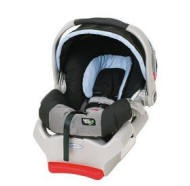
Allstate Canada has partnered with Dorel Juvenile Canada, makers of Safety 1st Canada products, to launch “Protecting Your Most Precious Cargo,” a campaign focused on taking a proactive approach to car seat safety.
A recent Allstate Canada national poll showed that 95% of Canadian parents state that they are confident they know how to properly buckle a child in a car seat.
Sadly, that same poll showed that 23% of Canadians with children under 12 believe that using a snow suit is the best way to keep them warm in the winter months. Only about one-in-10 (11%) parents of children under 12 say the best way to dress a child is in thin, warm layers.

Safety should always be your primary concern
Dressing your child properly to ride in their car seat is very important. Car seat manufacturers state in car seat manuals that bulk clothing is not safe when buckling a child into the car seat.
Allstate Canada has put together this great blog discussing “How to Dress Your Child for their Car Seat this Winter”

The video above shows the impact that bulky clothing has when tightening your child in a car seat.
I wrote a previous blog post where I show my own daughter in her car seat with and without a coat. You can read it here – “A winter coat is for playing in the snow, not in a car seat!”
So how should you dress them in the winter?
This image from the Car Seat Lady shows you how to keep your infants and children warm — layers!

More great info about dressing your child in their car seat in the winter can be found on the Vancouver Island Car Seat Tech page.
Properly installing the car seat is step #1
The one statistic that wasn’t given to me was the percentage of parents who felt they are confident that they know how to properly install a car seat.

As many as 80% of children aren’t being correctly restrained in child seats or booster seats.[Source]
We only slightly touched on the “not used correctly” issues when talking about winter clothing. Some of the most common issues are:
- Not installing the seat tight enough

Use the pinch test to see if the harness is tight enough.
- Not using the tether strap when forward facing
- Harness not tight enough (and winter clothing will give you a false sense of it being tight)
- Chest clip too low
- Harness straps in the incorrect position
- Wrong seat for the child’s age, height and weight
- Getting rid of the booster too soon
- Letting your child sit in the front seat too soon

How do you make sure that your seat is installed properly?
The first thing that I tell all parents is to read the manuals!

You must read your vehicle manual to know where you can install the seat and if the vehicle manufacturer puts any restrictions on car seat installation. You also must read the car seat manual to know how to install the car seat into the vehicle and how to put your child safely in the car seat.
You must read the car seat manual to know how to install the car seat into the vehicle and how to put your child safely in the car seat.
 The Safety 1st Grow and Go car seat has colour-coded their manual and the stickers making it easier to find information in the manual.
Safety 1st has really tried to help parents. This graphic on the first page is a quick snapshot of how to find the information they need:

Allstate Canada and Safety 1st made this video with some installation tips:
For more information about installing car seats, see Allstate Canada’s blog post: Tips For Properly Installing Your Child’s Car Seat
When to move to the next car seat?
Car seats fall into 3 stages:
- Rear facing
- Forward Facing
- Booster
From Allstate Canada’s GOOD HANDS blog post When to Move Your Child to the Next Car Seat Stage,
“While different car seats and regulations may vary, experts agree that children should stay in their rear-facing car seats until they’re at least 18 kg (40 lbs.); in their forward-facing 5-point harness seat until they are at least 29 kg (65 lbs.); and should use booster seats until they are at least 9 years of age and able to sit up straight with their back flat against the vehicle’s seat, and knees easily bent over the seat.
In other words, you don’t need to rush in moving a child up to the next level. Parents should take their time and transition their child to the next car seat when it makes the most sense for their safety. In fact, the longer a child can stay in their rear-facing seat, the safer they’ll be because these seats help to protect the neck and spinal cord of developing children better than any other seat.”
Safety 1st Grow and Go car seat is a 3-in-1 car seat that can be used for all three stages.


Allstate Canada’s video has great tips about when it is good to move your child to the next stage:
One of the great features of the Safety 1st Grow and Go seat is that it requires your child to be at least 2 years old before they can ride in it forward facing. This will help to ensure that children ride rear-facing until 2 years old. Rear-facing is the safest way for children to ride in a vehicle!
Have more questions?
It is aways best to talk to or meet with a Certified Car Seat Technician who can help you with any car seat questions that you might have. They will teach you about your car seat and how it fits in a vehicle.
It is nice to see that Allstate Canada has a certified car seat technician on their staff who can help their clients. This will be especially important if the client is ever in a collision as car seats must be replaced.
Enter to win a Safety 1st Grow and Go 3-in-1 Convertible Car Seat!

Allstate Canada and Safety 1st want to help your child be safe. Enter to win a Safety 1st Grow and Go car seat.
To find out more about Allstate Canada:
Blog: blog.allstate.ca
Twitter: @AllstateCanada
Facebook: Allstate Insurance Canada
YouTube: Allstate Canada
To find out more about Safety 1st Canada:
Facebook: Safety 1st Canada
Disclosure: This post was written as part of the Allstate Canada Influencer Program and is sponsored by Allstate Canada. All opinions are my own.
 I remember being a mom-to-be, walking up and down the aisles of the baby store and scanning all of the items that I thought would be required to keep my baby safe.
 These are the protectors that you can put in your car under the child car seat. They are supposed to protect your car from the indents that can happen from the child car seat or from spills and crumbs. Since this device was not crash tested with the child car seat that you own, you do not know how it will react in a collision.
 These are the cute window blinds, that roll up into a metal holder at the top. They are supposed to protect your child from the sun. Unfortunately, the suction cups that come with them don’t stick forever. This could lead to the shade coming off of the window and falling directly on your child. During a collision, if the window was to break, the metal holder then becomes a projectile flying through your car causing further damage to your child or yourself.
 These are the bags that are designed to go inside the car seat and then zip up and over your child to protect them from the cold. These are not recommended because they come between your child and the car seat. The added fabric will be compressed during a collision and will cause the harness straps to be loose. This means that your child will not be held firmly in the seat and there is potential for injury to occur.
 Suggested item – You want the cover that goes over the entire car seat. There is a window in the top so that you can see the baby’s face. This type does not interfere at all with the harness straps and your child can be secured properly.
 The cute mirrors that allow a parent to use the rear view mirror to see their rear-facing child are not recommended.
 Bumper Pads are not suggested because if a child gets caught in them, they could suffocate.
 For the same reason that roll up shades are not recommended, hard plastic baby on board signs should not be used as the suction cups detach and then it is a potential projectile in the car.
 The basic rules is: “If it didn’t come with the car seat, don’t use it.” Reason being is that everything that comes with the car seat has been crash tested with that seat and is safe to use. Many car seat manufacturers have started including these pads with the car seats so it’s not as much of an issue. Do not add anything to the harness straps of your child’s car seat.